A properly collected stool sample is essential for reliable laboratory testing. Whether the specimen is being examined for gastrointestinal infections, digestive disorders, inflammation, or other conditions, the collection container and handling process can directly affect specimen quality.
A stool collection cup provides a simple and hygienic way to collect, contain, and transport fecal specimens. This guide explains how to collect a stool sample correctly and introduces the MEIDIKE GENE 60ml Stool Collection Cup with Small Spoon, designed for convenient specimen collection and handling.
What Is a Stool Collection Cup?
A stool collection cup, also known as a stool specimen container or fecal collection cup, is a disposable container used to collect and hold stool samples for laboratory testing.
A suitable container should be clean, leak-resistant, easy to handle, and appropriately sized for the intended specimen. Many stool containers also include an integrated spoon or spatula to make sample collection easier.
How to Collect a Stool Sample Correctly
The exact procedure depends on the diagnostic test, so the instructions provided by the healthcare provider or laboratory should always take priority.
1. Prepare the Collection Container
Check that the stool specimen container is intact and ready for use. If labeling is required, prepare the patient’s identification information according to the laboratory’s instructions.
Wash your hands before and after specimen collection.
2. Avoid Contamination
Collect the stool without allowing it to come into contact with toilet water, urine, cleaning products, or other contaminants.
A clean disposable container or suitable collection sheet can be used to catch the stool before transferring the specimen.
3. Transfer the Required Amount
Use the spoon attached to the container lid to transfer an appropriate amount of stool into the cup.
The amount required varies according to the test. For some routine stool tests, a portion roughly the size of a walnut may be sufficient, while other tests have different requirements. Always follow the instructions for the specific test.
If the sample contains an area of interest such as mucus or blood, follow the laboratory’s collection instructions regarding which portion to include.
4. Close the Container Securely
After collecting the specimen, place the lid back onto the container and tighten it securely.
A properly sealed container helps minimize leakage and protects the specimen during handling and transportation.
5. Label and Transport the Sample
Clearly identify the specimen according to the receiving laboratory’s requirements. Depending on the workflow, this may include the patient’s name or identification number, collection date, and collection time.
The sample should normally be delivered to the laboratory as soon as possible. If immediate delivery is not possible, follow the specific storage requirements for the test. Different stool tests may require different storage conditions.
MEIDIKE GENE 60ml Stool Collection Cup with Small Spoon
For laboratories, diagnostic companies, hospitals, and medical distributors seeking a practical stool specimen container, MEIDIKE GENE offers a 60ml Stool Collection Cup with Small Spoon.
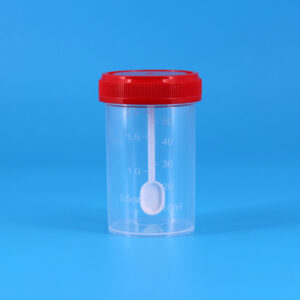
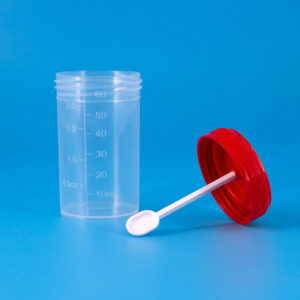
View the MEIDIKE GENE 60ml Stool Collection Cup with Small Spoon
Its integrated spoon makes specimen transfer convenient, while the screw-cap design helps provide secure closure during handling and transportation.
Key Features
- 60ml capacity for convenient stool specimen collection
- Integrated small spoon for easier sample transfer
- Graduated markings for practical volume reference
- Screw-on lid designed for secure closure
- PP or PS material options
- Sterile EO and non-sterile options
- Barcode customization available
- OEM/ODM customization for different customer requirements
These features make the container suitable for a variety of stool specimen collection, laboratory testing, and diagnostic applications.
What to Consider When Choosing a Stool Specimen Container
When selecting a stool collection cup for clinical or diagnostic applications, consider the following:
Leak resistance: The container should close securely to help prevent leakage during handling and transportation.
Collection convenience: An integrated spoon can simplify specimen transfer and reduce the need for separate accessories.
Material and capacity: Choose a material and container size appropriate for the intended application and testing workflow.
Identification: Graduations, labels, and barcode options can support specimen identification and laboratory management.
Sterility: Select sterile or non-sterile configurations according to the requirements of the intended test.