Rayon swabs are widely used in medical facilities, Laboratori diagnostici, and healthcare settings for specimen collection, cura delle ferite, and general medical applications. Known for their softness, absorbency, and consistent fiber structure, they are a practical option for many routine sampling and application procedures.
Tuttavia, not all rayon swabs are the same. Factors such as tip size, maneggiare il materiale, sterilità, and packaging can influence their suitability for different applications.
In questa guida, we will explain what rayon swabs are, their key advantages, common applications, and how to choose the right medical rayon swab for your needs.
1. What Are Rayon Swabs?
Rayon is a regenerated cellulose fiber produced from natural cellulose sources, such as wood pulp or cotton linters. Through a manufacturing process, cellulose is dissolved and regenerated into fibers that can be processed into soft, absorbent materials.
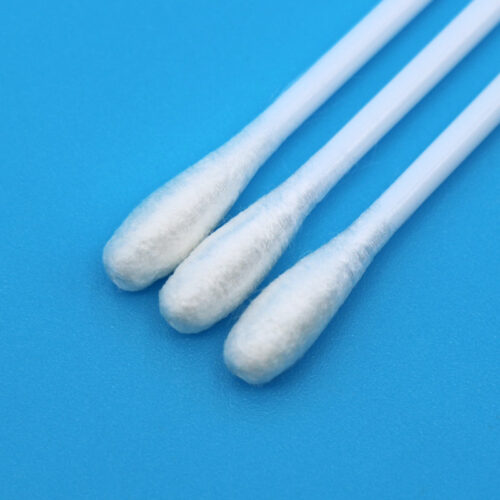
A rayon swab consists of a rayon fiber tip attached to a handle, commonly made of plastic, carta, or another suitable material.
Because of their softness, absorbency, and relatively uniform fiber structure, rayon swabs are commonly used in medical sampling, test diagnostici, patient care, and laboratory procedures.
Unlike traditional cotton fibers, rayon is manufactured through a controlled regeneration process, allowing manufacturers to produce consistent swab tips with specific dimensions and absorption characteristics.
2. Key Advantages of Rayon Swabs
Rayon swabs offer several useful characteristics that make them suitable for medical and laboratory applications.
High Absorbency
Rayon fibers can absorb liquids effectively, making rayon swabs useful for collecting specimens, absorbing fluids, and applying liquid solutions.
Soft and Gentle Tip
The soft rayon tip provides a gentle contact surface for routine medical applications and specimen collection procedures where a soft applicator is preferred.
Consistent Fiber Structure
Manufactured rayon fibers provide a relatively uniform structure, helping produce swab heads with consistent dimensions and performance.
Low-Lint Characteristics
Quality rayon swabs are designed to minimize loose fiber shedding, helping reduce unwanted fiber residue during sampling and application procedures.
Cost-Effective Material
Rayon offers a practical balance of absorbency, softness, and manufacturing cost, making it a popular material for disposable medical swabs.
3. Common Applications of Rayon Swabs
Rayon swabs are versatile medical consumables used in different healthcare and laboratory environments.
Clinical Specimen Collection
Sterile rayon swabs can be used to collect biological specimens for diagnostic testing when the material is compatible with the sampling protocol and test requirements.
DNA and Forensic Sample Collection
Rayon swabs may be used to collect biological material from appropriate sampling sites and surfaces for subsequent DNA analysis. Their suitability depends on the collection method and downstream testing requirements.
Wound Care and Cleaning
The soft, absorbent tip can help absorb fluids and assist with cleaning around wounds as part of routine wound care procedures.
Application of Medications
Healthcare professionals can use rayon-tipped applicators to apply antiseptic solutions, unguenti, and other topical preparations to targeted areas.
Laboratory and Research Applications
Rayon swabs are also used for general sample collection, liquid absorption, and other laboratory procedures where their material properties are appropriate.
4. How to Choose the Right Rayon Swab
Selecting the right rayon swab requires more than simply choosing the tip material. Buyers should consider the intended application, sampling site, swab dimensions, handle characteristics, and packaging requirements.
4.1 Tip Size and Shape
The size and shape of the rayon tip affect its contact area, absorption capacity, and suitability for different sampling procedures.
- Standard tips: Suitable for general specimen collection and routine medical applications.
- Mini tips: Designed for smaller or more targeted sampling areas where precision is important.
- Large or oversized tips: Provide a larger absorbent surface and are useful for applications requiring greater fluid absorption or wider coverage.
The appropriate tip size should be selected according to the intended sampling site and procedure.
4.2 Handle Material and Length
The handle affects the swab’s rigidity, flessibilità, reach, and ease of handling.
Common handle materials include:
- Polistirolo (PS): Provides a lightweight, rigid structure and stable handling. Suitable for many standard medical and diagnostic swabs.
- Polipropilene (PP): Offers good durability and some flexibility, making it useful for certain longer swab designs.
- Paper: Lightweight and disposable, commonly used in selected general-purpose applicators.
- Aluminum: Provides a slim, rigid structure for specialized swab designs.
Handle length should also match the application. Standard-length swabs are suitable for many routine procedures, while longer handles may be needed for applications requiring additional reach.
4.3 Sterile or Non-Sterile?
Rayon swabs are available in both sterile and non-sterile formats.
- Sterile rayon swabs: Appropriate when the procedure requires a sterile sampling tool or when contamination control is important.
- Non-sterile rayon swabs: Suitable for certain general cleaning, preparazione, and other applications where sterility is not required.
For diagnostic specimen collection, buyers should follow the requirements of the relevant test method and laboratory protocol.
4.4 Individual Packaging or Bulk Packaging?
Packaging is another important consideration when purchasing rayon swabs.
- Individually wrapped packaging: Provides a separate protective package for each swab and is convenient for clinical environments requiring individual sterile units.
- Imballaggio sfuso: Suitable for applications where large quantities are used and individual sterile packaging is not necessary.
- Swab and tube packaging: Combines a swab with a compatible collection or transport tube when the sampling workflow requires it.
Choosing the appropriate packaging format can improve storage, gestione, and operational efficiency.
5. Rayon Swabs vs. Other Swab Materials
Different swab materials offer different characteristics. Understanding these differences can help buyers select the most appropriate product.
| Materiale del tampone |
Main Characteristics |
Typical Applications |
| Rayon |
Morbido, assorbente, relatively uniform fibers |
General specimen collection and medical applications |
| Nylon Flocked |
High sample release and efficient specimen collection |
Diagnostic specimen collection |
| Polyester |
Durable, basso contenuto di pelucchi, and chemically resistant |
Laboratory and specialized sampling |
| Schiuma |
Morbido, non-abrasive, and absorbent |
General cleaning and specimen collection |
| Cotone |
Soft and naturally absorbent |
General cleaning and selected medical applications |
No single material is suitable for every procedure. The best choice depends on the sampling method, specimen type, test compatibility, and intended use.
6. MEIDIKE GENE Medical Sterile Rayon Swab with Polystyrene Handle
For medical distributors, laboratori, and healthcare product suppliers looking for a reliable disposable sampling applicator, MEIDIKE GENE offers the Tampone medico sterile in rayon (MWS001 PET).
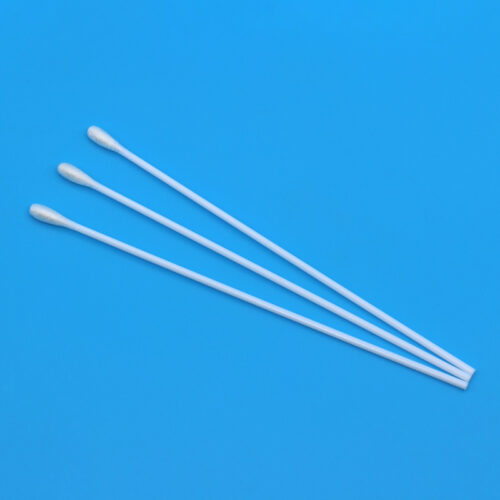
This product combines an absorbent rayon tip with a lightweight, rigid polystyrene handle. It is designed for specimen collection, Test del DNA, cura delle ferite, and topical medication application.
Main Applications
The MWS001 PET medical sterile rayon swab is suitable for:
- Clinical and diagnostic specimen collection
- Raccolta di DNA e campioni forensi
- Wound treatment and cleaning
- Applicazione di farmaci topici
- Prove di laboratorio e procedure di ricerca
For detailed product information, visita il nostro Tampone di rayon sterile medica con manico in polistirolo.