In the field of microbiology and clinical diagnostics, transport swabs play a crucial role in collecting, preserving, and transporting specimens from patients to laboratories. These swabs help maintain the viability of microorganisms by preventing contamination and desiccation during transport, ensuring accurate test results.
Transport swabs are commonly used for sampling from wounds, throat, nasal passages, or other clinical sites when testing for bacterial or viral infections. Selecting the right transport medium—such as Stuart, Cary-Blair, or Amies—is essential for maintaining specimen integrity until laboratory analysis.

What Is a Transport Swab?
A transport swab consists of two main parts:
- Swab tip: Made from synthetic materials like rayon or nylon to collect samples effectively.
- Transport medium: A semi-solid or liquid substance that preserves microorganisms by preventing their overgrowth or death.
These swabs come in various types designed to suit different transport conditions. Some are meant for aerobic organisms, others for anaerobic or fastidious bacteria.
Types of Transport Swabs
There are three major types of transport media commonly used in clinical diagnostics — Stuart, Amies, and Cary-Blair. Each is formulated to support different specimen types and microorganisms.
1. Stuart Transport Medium
The Stuart medium is one of the earliest formulations used for specimen transport. It is a semi-solid, non-nutritive medium that preserves bacterial viability without promoting growth. Stuart transport swabs are suitable for specimens like throat, wound, and vaginal swabs.
Key Features:
-
Contains sodium glycerophosphate as a buffering agent.
-
Maintains bacterial survival for several hours.
-
Ideal for aerobic and anaerobic bacterial samples.
2. Amies Transport Medium
The Amies transport medium is a modified version of the Stuart medium with the addition of charcoal or other ingredients to neutralize toxic substances. Amies swabs are highly versatile and widely used in microbiology laboratories.
Key Features:
3. Cary-Blair Transport Medium
The Cary-Blair medium is a semi-solid medium designed primarily for the transport of enteric pathogens such as Salmonella, Shigella, and Vibrio cholerae from stool samples.
Key Features:
-
Maintains viability of intestinal bacteria.
-
Ideal for fecal specimens and rectal swabs.
-
Low nutrient content prevents overgrowth of non-pathogenic bacteria.
Applications of Transport Swabs
Transport swabs are used across various healthcare and diagnostic settings, including:
-
Clinical diagnostics: for collecting throat, nasal, wound, vaginal, and rectal samples.
-
Public health surveillance: for detecting infectious diseases.
-
Environmental testing: to monitor contamination in medical and food industries.
-
Veterinary diagnostics: for collecting animal specimens.
Choosing the Right Transport Swab
Selecting the correct type of transport swab depends on the specimen and the target microorganism.
-
Use Stuart swabs for general bacterial culture.
-
Choose Amies swabs for fastidious organisms and wide-range transport.
-
Select Cary-Blair swabs for stool and intestinal pathogen samples.
Proper storage and handling are essential to maintain specimen integrity. Always follow laboratory protocols and manufacturer instructions.
MEIDIKE GENE offers a complete range of high-quality transport swabs designed for reliable sample collection and safe transport. Our swabs are produced in ISO-certified facilities and meet international standards for medical specimen transport.
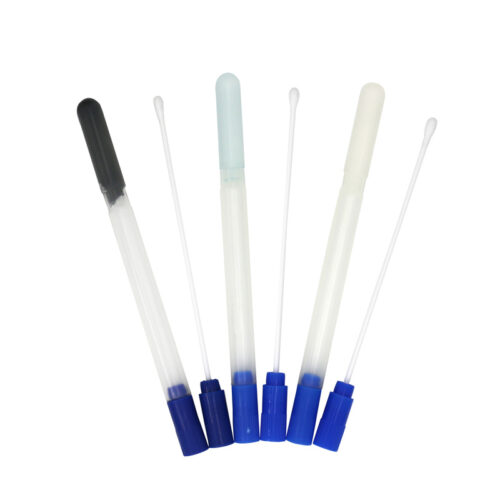
Advantages of MEIDIKE GENE Transport Swabs:
-
Sterile and individually packed for safe use.
-
High-quality nylon or rayon swabs for efficient specimen absorption.
-
Leak-proof transport tubes to prevent contamination.
-
Available in Stuart, Amies and Cary-Blair media (with/without charcoal).
-
Suitable for clinical, environmental, and veterinary diagnostics.
✅ Contact our sales team for OEM/ODM customization and bulk order inquiries.
✅ Request free samples to test compatibility with your laboratory protocols.
Visit MEIDIKE GENE Transport Swabs