
专门生产植绒拭子的制造商 & CHG产品.
粪便样本采集: 如何正确使用粪便收集杯
2026-10-28
正确收集的粪便样本对于可靠的实验室检测至关重要. 标本是否正在接受胃肠道感染检查, 消化系统疾病, 炎, 或其他条件, 采集容器和处理过程直接影响标本质量.
A 粪便收集杯 provides a simple and hygienic way to collect, 包含, 和运输粪便标本. This guide explains how to collect a stool sample correctly and introduces the MEIDIKE GENE 60ml Stool Collection Cup with Small Spoon, designed for convenient specimen collection and handling.
What Is a Stool Collection Cup?
A stool collection cup, 也称为 stool specimen container or fecal collection cup, is a disposable container used to collect and hold stool samples for laboratory testing.
A suitable container should be clean, leak-resistant, 易于处理, and appropriately sized for the intended specimen. Many stool containers also include an integrated spoon or spatula to make sample collection easier.
How to Collect a Stool Sample Correctly
The exact procedure depends on the diagnostic test, so the instructions provided by the healthcare provider or laboratory should always take priority.
1. Prepare the Collection Container
Check that the stool specimen container is intact and ready for use. If labeling is required, prepare the patient’s identification information according to the laboratory’s instructions.
Wash your hands before and after specimen collection.
2. 避免污染
Collect the stool without allowing it to come into contact with toilet water, 尿, cleaning products, or other contaminants.
A clean disposable container or suitable collection sheet can be used to catch the stool before transferring the specimen.
3. Transfer the Required Amount
Use the spoon attached to the container lid to transfer an appropriate amount of stool into the cup.
The amount required varies according to the test. For some routine stool tests, a portion roughly the size of a walnut may be sufficient, while other tests have different requirements. Always follow the instructions for the specific test.
If the sample contains an area of interest such as mucus or blood, follow the laboratory’s collection instructions regarding which portion to include.
4. Close the Container Securely
After collecting the specimen, place the lid back onto the container and tighten it securely.
A properly sealed container helps minimize leakage and protects the specimen during handling and transportation.
5. Label and Transport the Sample
Clearly identify the specimen according to the receiving laboratory’s requirements. Depending on the workflow, this may include the patient’s name or identification number, 收集日期, 和收集时间.
The sample should normally be delivered to the laboratory as soon as possible. If immediate delivery is not possible, follow the specific storage requirements for the test. Different stool tests may require different storage conditions.
MEIDIKE GENE 60ml Stool Collection Cup with Small Spoon
用于实验室, 诊断公司, 医院, and medical distributors seeking a practical stool specimen container, MEIDIKE GENE offers a 60ml 带小勺子的粪便收集杯.
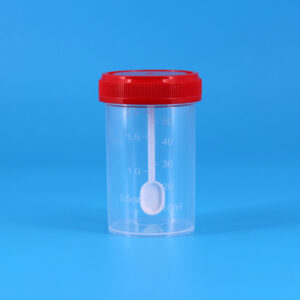
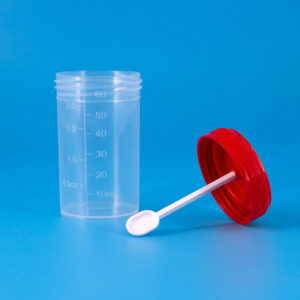
View the MEIDIKE GENE 60ml Stool Collection Cup with Small Spoon
Its integrated spoon makes specimen transfer convenient, while the screw-cap design helps provide secure closure during handling and transportation.
主要特点
- 60ML容量 for convenient stool specimen collection
- Integrated small spoon for easier sample transfer
- Graduated markings for practical volume reference
- Screw-on lid designed for secure closure
- PP or PS material options
- Sterile EO and non-sterile options
- Barcode customization 可用的
- OEM/ODM定制 for different customer requirements
These features make the container suitable for a variety of 粪便标本采集, 实验室测试, 和诊断应用.
What to Consider When Choosing a Stool Specimen Container
When selecting a stool collection cup for clinical or diagnostic applications, consider the following:
Leak resistance: The container should close securely to help prevent leakage during handling and transportation.
Collection convenience: An integrated spoon can simplify specimen transfer and reduce the need for separate accessories.
Material and capacity: Choose a material and container size appropriate for the intended application and testing workflow.
Identification: Graduations, labels, and barcode options can support specimen identification and laboratory management.
Sterility: Select sterile or non-sterile configurations according to the requirements of the intended test.
也许你也喜欢
» 什么是宫颈管刷?

版权所有©2026. 医药科技有限公司, 有限责任公司