Clean rooms play a critical role in industries where contamination control is essential. From pharmaceutical manufacturing and biotechnology to semiconductor production and medical device assembly, maintaining the correct clean room grade ensures product quality, safety, and regulatory compliance.
In this blog post, we will explain what clean room grades are, how they are classified, and why they matter for different industries.
What Are Clean Room Grades?
Clean room grades are standardized classifications used to define the cleanliness level of a controlled environment. These grades are determined by the number and size of airborne particles permitted per cubic meter or cubic foot of air.
The cleaner the room, the lower the number of particles allowed.
Clean room classifications help manufacturers maintain strict contamination control during sensitive production processes.
Why Are Clean Room Grades Important?
Clean room grades are important because airborne particles, microbes, and contaminants can negatively affect products and processes. Even microscopic contamination may lead to product defects, failed testing, or safety risks.
Industries that rely on clean rooms include:
- Pharmaceutical manufacturing
- Biotechnology laboratories
- Medical device production
- Semiconductor manufacturing
- Aerospace engineering
- Food processing
- Electronics assembly
Using the correct clean room grade helps companies:
- Improve product quality
- Meet regulatory requirements
- Reduce contamination risks
- Increase production consistency
- Protect sensitive equipment and materials
ISO Clean Room Classification Standards
The most widely used clean room standard is ISO 14644-1. This international standard classifies clean rooms based on the concentration of airborne particles.
ISO Clean Room Classes Overview
| ISO Class |
Maximum Particles ≥0.5µm per m³ |
| ISO 1 |
10 |
| ISO 2 |
100 |
| ISO 3 |
1,000 |
| ISO 4 |
10,000 |
| ISO 5 |
100,000 |
| ISO 6 |
1,000,000 |
| ISO 7 |
352,000 |
| ISO 8 |
3,520,000 |
| ISO 9 |
Equivalent to normal room air |
Lower ISO class numbers indicate cleaner environments.
Common Clean Room Grades and Their Applications
ISO Class 5 Clean Rooms
ISO Class 5 clean rooms are extremely clean environments commonly used in:
- Sterile pharmaceutical filling
- Medical device assembly
- Biotechnology research
- Semiconductor manufacturing
These environments typically use laminar airflow systems and HEPA or ULPA filtration.
ISO Class 7 Clean Rooms
ISO Class 7 clean rooms are widely used in:
- Pharmaceutical packaging
- Electronics manufacturing
- Laboratory testing
- Medical consumables production
Personnel must wear appropriate clean room garments to minimize contamination.
ISO Class 8 Clean Rooms
ISO Class 8 clean rooms are less stringent but still controlled environments suitable for:
- General manufacturing
- Plastic injection molding
- Food packaging
- Some medical device production
These rooms are easier and less expensive to maintain compared to higher-grade clean rooms.
GMP Clean Room Grades
In pharmaceutical manufacturing, clean rooms are also classified according to GMP (Good Manufacturing Practice) standards.
The European Union GMP guideline defines four clean room grades:
| GMP Grade |
Typical Application |
| Grade A |
High-risk sterile operations |
| Grade B |
Background environment for Grade A |
| Grade C |
Less critical manufacturing steps |
| Grade D |
Basic clean production areas |
GMP grades focus not only on airborne particles but also on microbiological contamination control.
Key Components of a Clean Room
Several factors help maintain clean room grades and contamination control.
HEPA and ULPA Filtration
High-efficiency filters remove airborne particles and maintain air cleanliness.
Controlled Airflow
Laminar or turbulent airflow systems help reduce particle accumulation.
Clean Room Garments
Protective clothing such as gowns, gloves, masks, and shoe covers minimize contamination from personnel.
Environmental Monitoring
Continuous monitoring of particles, temperature, humidity, and microbial levels ensures compliance with clean room standards.
How to Choose the Right Clean Room Grade
Selecting the proper clean room grade depends on several factors:
- Product sensitivity
- Industry regulations
- Manufacturing process requirements
- Risk of contamination
- Budget and operational costs
For example:
- Sterile pharmaceutical manufacturing usually requires ISO Class 5 or GMP Grade A environments.
- Electronics assembly may use ISO Class 7 or ISO Class 8 clean rooms.
- General packaging operations often use lower-grade clean environments.
Conducting a contamination risk assessment is essential before designing a clean room facility.
As a trusted medical consumables manufacturer, Medico operates modern GMP-compliant production workshops designed specifically for the manufacturing of medical consumables. Our factories feature Class 100,000 cleanrooms and professional laboratory facilities to ensure strict contamination control and consistent product quality.
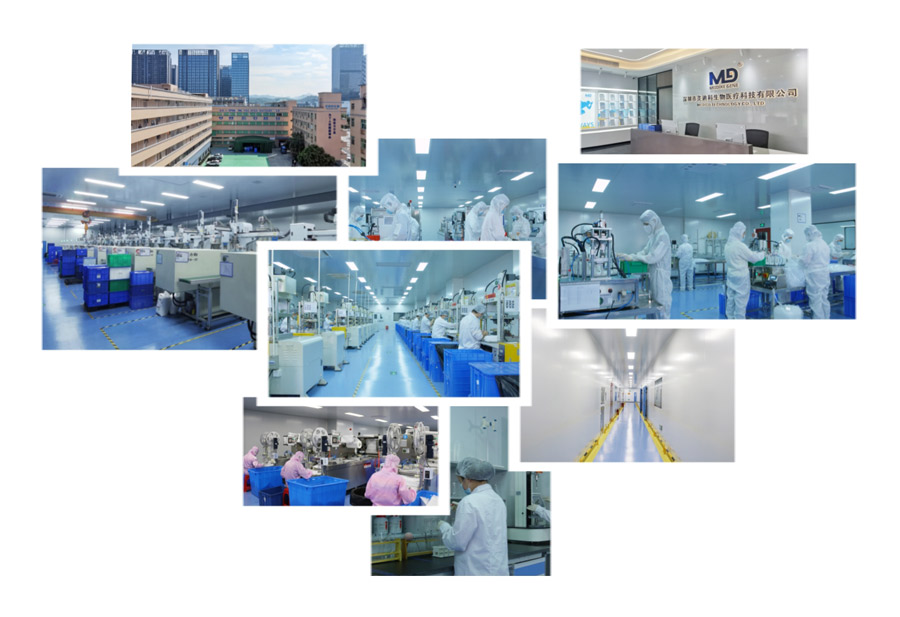
Medico’s GMP cleanroom facilities support the manufacturing of a wide range of products, including: